

Accurate and Robust Color Reproduction Across Display Technologies
Authors: María José Pérez-Peñalver, Seung-Wook Lee, Cristina Jordán, Esther Sanabria-Codesal, and Samuel Morillas.
Published in Displays, Elsevier (2026)
DOI: 10.1016/j.displa.2026.103342
Addressing the Inverse Problem in Display Characterization
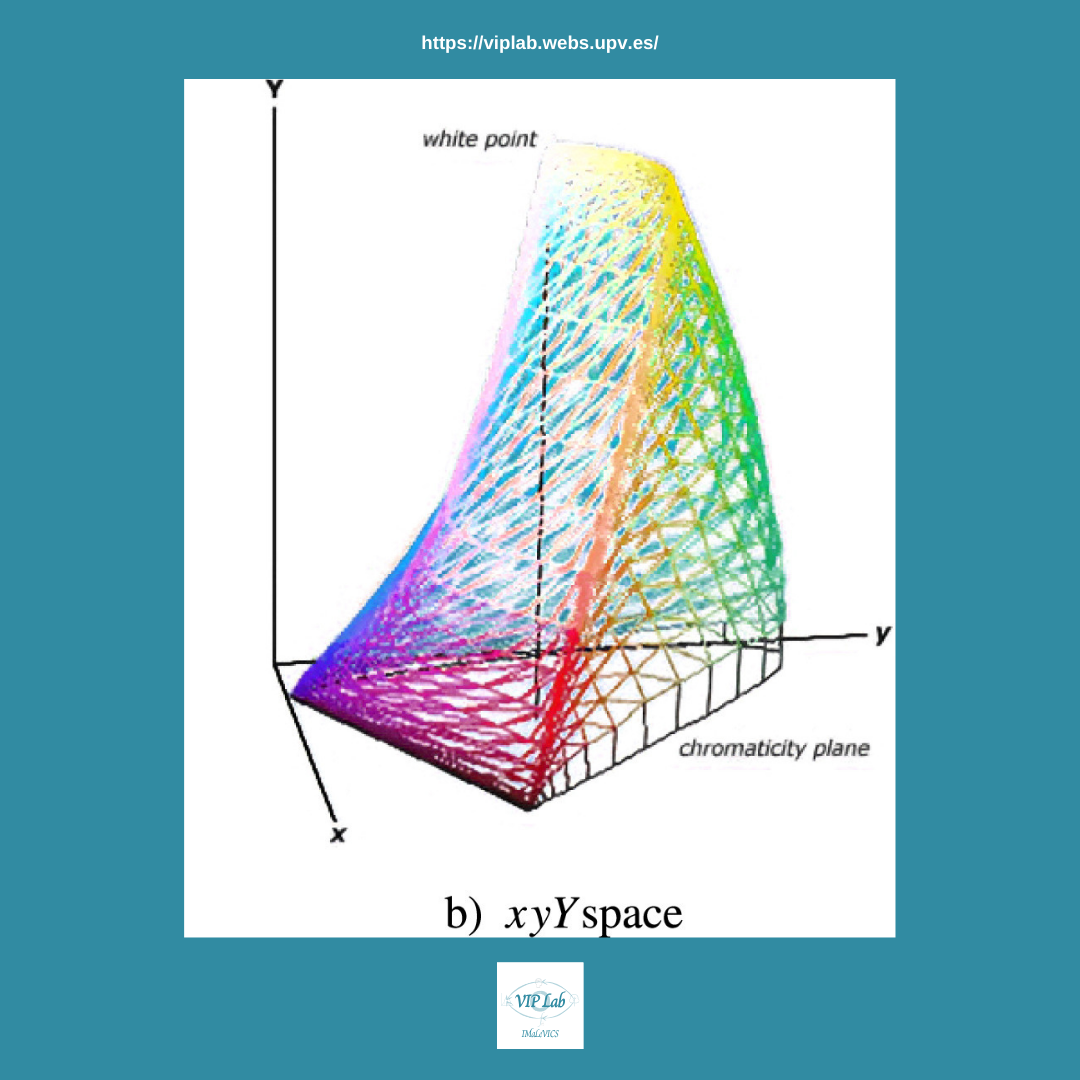
We are pleased to share that the IMaLeVICS team has published a new paper in the journal Displays, titled “A New Iterative Inverse Display Model.” This work addresses one of the central challenges in display characterization and color management: the inverse display problem. Given a desired color defined in a device-independent space (such as XYZ or xyY), how can we accurately determine the RGB values required to reproduce that color on a specific display?
Unlike direct characterization, where displayed colors are predicted from RGB inputs, the inverse problem is nonlinear, ill-conditioned, and highly sensitive to display technology. This makes it especially difficult to solve using traditional analytical or physically constrained models.
A Color-Science-Guided Iterative Inverse Model
The proposed method introduces a universal iterative inverse model built on top of a previously validated direct display model. Rather than relying on explicit mathematical inversion, the approach uses iterative refinement guided by feedback from the direct model.
Key to the method is the use of heuristics inspired by color science, including geometric chromaticity projections in the CIE 1931 xy space and nonlinear luminance modeling. Chromaticity and luminance are treated separately throughout the process, allowing efficient convergence while preserving perceptual consistency.
Relevance within the IMaLeVICS Research Line
This work aligns closely with the goals of the IMaLeVICS project: developing interpretable, robust, and practically applicable models for vision and color science. The proposed inverse model demonstrates strong performance across different display technologies, particularly in cases where traditional physically based assumptions do not hold.
Detailed experimental validation and comparisons with state-of-the-art methods are available in:
Readers interested in related work on display characterization, color modeling, and interpretable vision methods can explore other IMaLeVICS publications.